

We spend a lot of time talking about the value of a long-term resident in your property. We think this is one of the best ways to make consistent income in the short-term and increased ROI over the long-term.
But we also understand how attractive short-term rentals are, especially now. They often bring in a higher rent per-night, and they offer owners a lot more flexibility.
In our market, which is a popular tourist destination, plenty of property owners are finding that they can make good money on short term and vacation rentals. If you’re trying to target vacationers or business travelers, a furnished, short term rental home can bring in excellent business.
However, it’s hard to estimate exactly what you’ll be earning on your property. It’s a lot of work turning that property over between guests. State and local regulations, restrictions, and fees are becoming more complex for short term rentals. And, as we saw with the pandemic, tourism is an industry that’s dependent on a lot of factors that you cannot necessarily control.
Because we have so many investors asking about it, we have decided to take a look at whether short-term rentals or long-term rentals are better for you and your investment property. We’ll examine some pros and cons to each in an effort to help you decide whether you should rent your investment property out for the short or long term.
In the end, you’ll have to do a comparison that fits the unique position of your own rental property. Compare a year’s worth of income and expenses on a long term lease to those same numbers on a short term lease.
Every investor is different. Every property is different, too. Here’s what we can tell you works and does not work in general.
Thinking About Short-Term Rental Investments
Here are some of the benefits to renting your investment property out for only a few nights or a few weeks at a time.
- Flexibility
Owners have a lot more flexibility. This type of rental arrangement means you aren’t tied down for a year or longer. You don’t have to fulfill the obligations of a long-term lease agreement. If you’re leaving the area temporarily and you hope to move back into the home one day, short-term leases will allow you to get the home back when you’re ready. You can also reserve specific times when you’ll use the property yourself. You have the freedom to structure rental periods seasonally or in ways that work best for your own needs.
- Higher Earnings Per-Night
Earnings are structured differently with short-term rentals, and you can charge more on a per-night basis than you do with long-term rentals. This can generate some great cash flow, especially if you manage to maintain high occupancy rates. The nightly or weekly rate you charge on a short term rental is often double or even triple what you’d charge per-night on a long term rental.
- Tenants
There’s also the matter of tenants. Your relationship will be different with short-term guests than they will be with long-term residents. You’ll be focused on customer service. These guests do not have the same tenant protections as your long-term residents who are operating under a lease agreement.
Some of the challenges to consider:
- Time and Effort
There’s often more work required. Your guests and visitors are constantly changing, and you have to remain responsive. You have to clean. You have to fix what’s broken. If you cannot commit to the ongoing maintenance and care of your property, a short term lease might not be best.
- Vacancy Risk
Vacancies will happen, and they will feel expensive. You might find yourself making $5,000 one month and $500 the next month. This can make budgeting and planning a challenge.
- Furnished Homes are Required
Something you don’t have to think about with long-term rentals: furniture. Furnishings need to be attractive, comfortable, and high-quality. You’ll need to provide furniture as well as linens, pots and pans, cooking utensils, and creature comforts that guests are looking for. Wi-Fi will need to be good, smoke and carbon monoxide detectors must work, and you’ll have to have safety precautions in place.
Choosing Long-Term Rental Investments
 Long term rentals are often better for a number of reasons. Most important is your ROI. If you’re planning to invest over many years, this is the best way to build wealth.
One of the benefits to renting a property for the standard 12-month term is that these are the homes a majority of the tenant pool is seeking. They want that stable property that they know will be their home for at least a year. You’ll usually find tenants who are hoping to stay for longer than 12 months. There’s a large demand for vacation homes, but there’s even a more robust demand for stable, long-term rental homes.
Long-term tenants also add some stability to your investment. You build a relationship with your tenant and you have a good idea of who is in your property. There’s less uncertainty, and usually less risk. You can plan what you’ll be earning over the course of a year. You won’t have to spend as much money on maintenance, cleaning, and prepping. There’s no responsibility for furniture. You can make your long-term tenants responsible for their own utility accounts.
On the downside, you might not get those super-high nightly rents that you can charge when a tenant is looking to stay somewhere for one or two days. You also have to respect the length of the lease period, and it will be difficult and expensive to move the tenant out through no fault of their own.
When we work with investors, we always recommend thinking about long-term investment strategies. Those short-term rentals have a place in the market, but for many investors, long-term rentals can get them to their investment goals more reliably.
Choosing between short and long term really depends on whether you want to earn as much as possible and you don’t mind the constant turnover, or if you’re looking for predictable and stable income with one tenant. Let’s talk about what’s best for you.
Please contact us at Bayside Management. We lease, manage, and maintain investment properties in San Mateo and around the Peninsula, including San Carlos, Redwood City, Pacifica, San Bruno, Half Moon Bay, Daly City, Mountain View, Foster City, and Palo Alto.

 Peter Boda
 Jeff Hacker
 Dylan Motchar
 Barbara Boyd
 Joanelle Russell
 Mary Wiegmann
 Joseph DeNoia
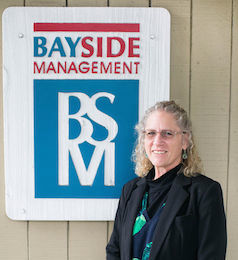 Beth Nagy
 Jasmin Peraza
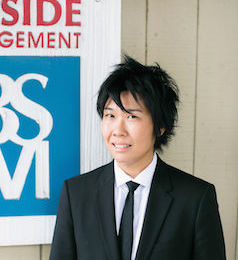 Carmin Wong
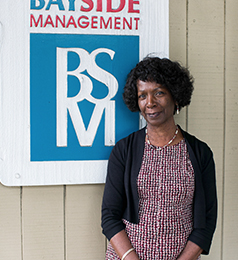 Pauline Smith
 Victoria Taylor
 Yvette Perreca
 Anthony Fregoso
 Anthony Thompson
 Drew Reischl
 Nick Lange
 Collette Counter
 Justin Barton
 Steve Brunings
 Anastasiia Shiianova