
 How are local rental regulations in San Mateo impacting your investment strategy?
Maybe if you were hoping to rent out short-term vacation homes, you’ve pivoted to long-term leases because of the strict regulations on short-term rentals. Perhaps you’ve changed your screening criteria because of the requirement that you approve the first tenant who meets your standards.
Understanding the regulatory environment in San Mateo is foundational to your rental portfolio’s performance. While San Mateo does not have a traditional city-level rent control ordinance, a combination of California statewide laws and targeted local regulations significantly shapes rental income potential, tenant management, and long-term asset strategy.
There are also eviction laws and security deposit regulations and habitability standards.
Your investment strategy needs to account for legal compliance.
Our Overview:
|
The Regulatory Framework: State Law Drives the Market
Unlike nearby cities such as San Francisco, San Mateo relies primarily on the Tenant Protection Act of 2019 rather than a local rent control system.
Under AB 1482:
- Annual rent increases are capped at 5% + CPI (inflation), or 10%, whichever is lower
- “Just cause” eviction rules apply after 12 months of tenancy
- Certain no-fault evictions require relocation assistance payments
For investors, this creates a predictable but constrained revenue growth ceiling. You cannot rely on aggressive rent increases to drive returns, especially in stabilized properties. Even if your property is exempt from rent control, you’re competing with properties that do have to follow those restrictions, and that means keeping your rents competitive.
Cash flow projections must be conservative and reflect inflation. Investors should underwrite deals assuming moderate rent growth and not huge market spikes.
Property Type and Age: The Most Important Variables
One of the most critical nuances of AB 1482 is that not all properties are covered.
Covered properties include most multifamily properties older than 15 years. Exempt properties are new construction buildings built within the last 15 years as well as single-family homes owned by individuals. Owner-occupied duplexes are exempt, too.
This creates a two-tier investment landscape.
- Value-add investors may prefer older buildings (predictable tenants, stable occupancy)
- Yield-maximizing investors may target newer or exempt properties for pricing flexibility
Portfolio diversification across both categories can limit your regulatory risk.
Rent Growth Constraints and Return Compression
The rent cap directly impacts return profiles.
In high-cost markets like San Mateo, this means:
- Rent increases may lag behind market demand
- Operating costs (insurance, taxes, maintenance) may outpace allowable rent growth
This could lead investors to focus on:
- Operational efficiency
- Expense control
- Long-term appreciation rather than short-term rent gains
Cap rates in regulated environments often compress because income growth is capped but demand remains high.
Just Cause Evictions Can Reduce Operational Flexibility
AB 1482 significantly limits an owner’s ability to remove tenants. Permissible reasons that we most commonly see include:
- Non-payment or lease violations (at-fault)
- Owner move-in or major renovations (no-fault)
However, no-fault evictions may require relocation payments equal to one month’s rent or more.
Tenant turnover is no longer purely discretionary. It’s regulated and potentially costly.
This affects an owner’s repositioning strategies and renovation timelines. Investors should prioritize tenant screening and retention, as turnover is more complex and expensive than in unregulated markets.
Short-Term Rental Regulations: Limited Flexibility for Alternative Income
San Mateo has enacted specific rules governing short-term rentals (STRs), which restrict flexibility for investors looking to pivot to short-term leasing models.
Key rules include:
- STRs must be registered and licensed
- A primary residence can only be rented up to 120 days per year if the host is not present
- Operators must pay transient occupancy taxes and comply with local standards
- Accessory Dwelling Units (ADUs) are not eligible for STR use
Buy-and-hold long-term leasing remains the dominant and often only compliant, model.
Investment Strategy Adjustments for 2026 and Beyond
To succeed under San Mateo’s regulatory structure, investors should adapt in several recommended ways:
- Prioritize Long-Term Appreciation. With rent growth capped, equity gains become the primary way to increase returns.
- Optimize Asset Selection. Focus on exempt properties for flexibility and older properties for stability (with realistic expectations).
- Strengthen Lease and Compliance Practices. Regulatory missteps such as improper eviction notices can lead to legal exposure.
- Build Regulatory Risk Into Underwriting. Model scenarios where rent increases are capped at lower CPI levels and vacancy becomes more expensive.
- Consider Value Through Improvements Carefully. Major renovations can justify higher rents and allow you to move out existing tenants, but they must align with “just cause” rules and permitting requirements.
Our best advice? Partner with a professional property manager in San Mateo to protect you from potential legal missteps.
FAQs
- Does San Mateo have rent control?
No, San Mateo does not have a city-specific rent control ordinance, but most properties are subject to California’s AB 1482 rent caps and eviction protections.
- How much can I raise rent each year?
Typically, 5% plus CPI, capped at 10% annually, depending on inflation and eligibility.
- Are all properties covered by these rules?
No. Newer buildings, certain single-family homes, and owner-occupied properties may be exempt.
- Can I evict a tenant to renovate?
Yes, but only under “just cause” provisions, and you may need to provide relocation assistance.
- Can I switch to short-term rentals to increase income?
Only in limited cases. San Mateo restricts short-term rental usage, including a 120-day annual cap for non-hosted rentals.
We believe a disciplined, regulation-aware strategy is essential in San Mateo. Investors who understand and adapt to these constraints can still achieve strong, stable returns, but those who ignore them risk legal exposure and penalties.
 Worried you might be missing something? Contact us at Bayside Management. We lease, manage, and maintain investment properties in San Mateo and around the Peninsula, including San Carlos, Redwood City, Pacifica, San Bruno, Half Moon Bay, Daly City, Mountain View, Foster City, and Palo Alto.

 Peter Boda
 Jeff Hacker
 Dylan Motchar
 Barbara Boyd
 Joanelle Russell
 Mary Wiegmann
 Joseph DeNoia
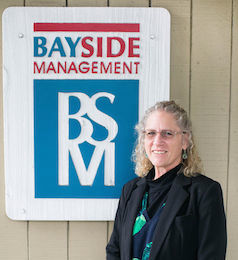 Beth Nagy
 Jasmin Peraza
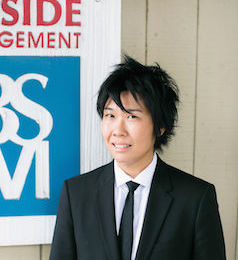 Carmin Wong
 Pauline Smith
 Victoria Taylor
 Yvette Perreca
 Anthony Fregoso
 Anthony Thompson
 Drew Reischl
 Nick Lange
 Collette Counter
 Justin Barton
 Steve Brunings
 Anastasiia Shiianova